Finalizing the design system of Offener Kreis
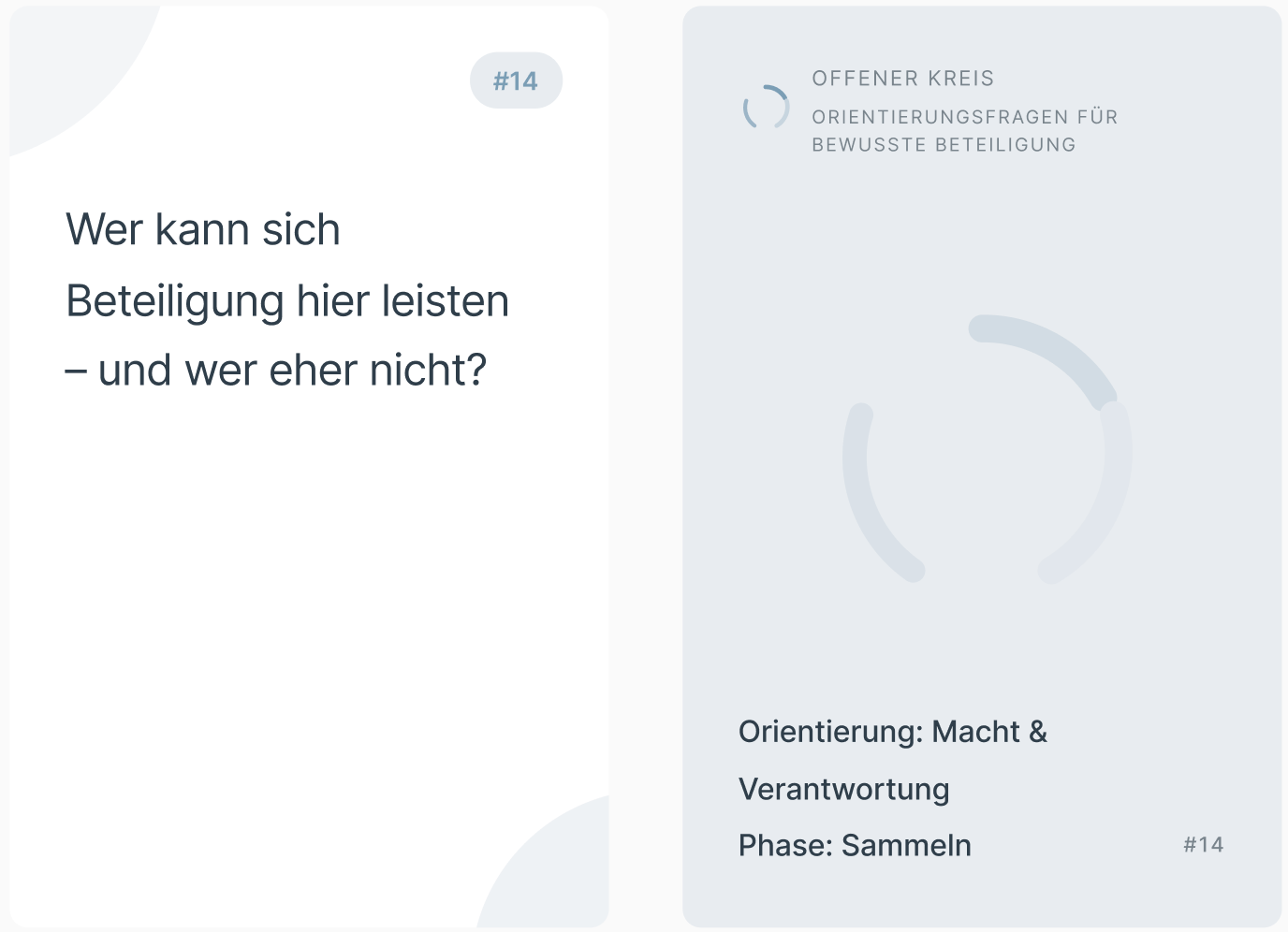
A short process note on how the Offener Kreis reflection card set evolved from a coherent layout into a clearer visual orientation system.
From coherent layout to visual system
A few weeks ago, I wrote about the first visual direction for Offener Kreis.
At that point, the structure of the set was already there. The two dimensions, project phase and orientation, were conceptually stable. The cards looked calm, coherent, and usable.
Still, the collaboration with designer Daniel Marks shifted something important: the question was no longer only whether the set looked good, but whether its internal logic could be understood through the visual language itself.
Making the two dimensions visible
The most important step in the redesign was to make the two dimensions legible at first glance.
The five orientations now use a distinct color system. The project phases are additionally marked through icons.
Both are now present directly on the front side of each card.
This sounds like a small change, but it fundamentally changes the accessibility of the set: instead of first reading and then inferring structure, the structure now becomes part of the first impression.
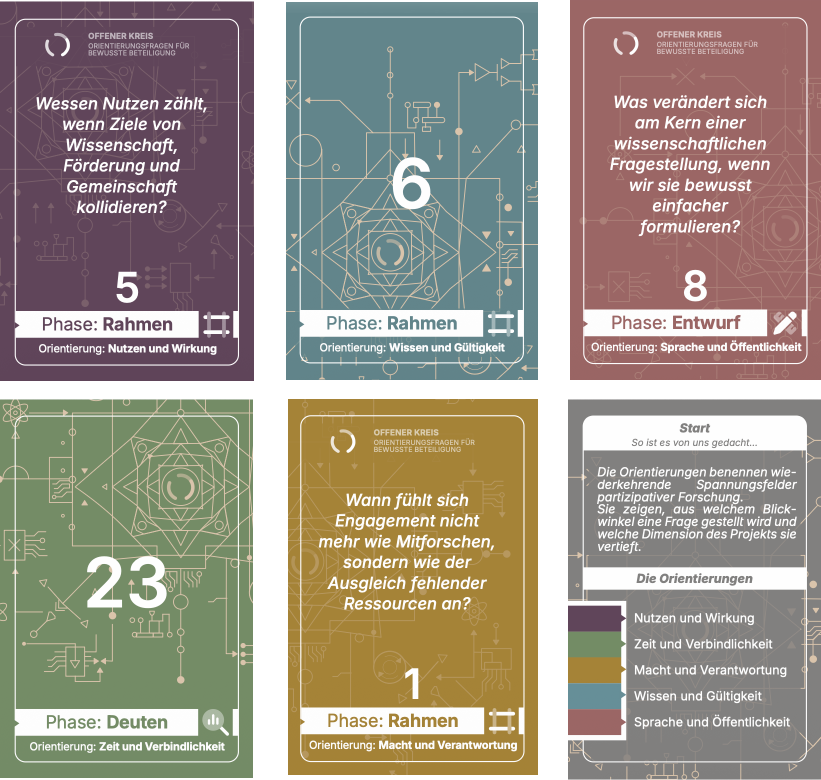
Because this additional information now shares space with the actual reflection prompt, the question typography was also made more assertive. The wording needed to remain the center of gravity of the card.
This was one of the moments where I learned to appreciate how much professional design is about hierarchy rather than decoration.
Supporting the entry into the system
A second important addition are two new insert cards.
Their role is not to add more content, but to lower the threshold for first use. They explain the color and icon logic of the two dimensions and make it easier to intentionally choose an entry point into the set.
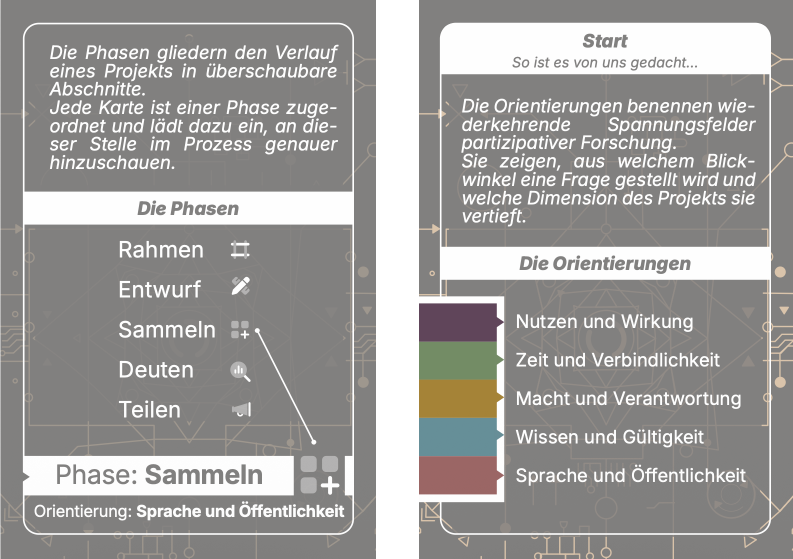
In retrospect, this may be the most valuable improvement: the set now asks for far less explanation upfront.
The insert cards provide a gentle entry point, while the colors, icons, and front-side labels help reinforce that logic during use. Instead of carrying the full burden of explanation in text, the visual system now shares that work.
What changed for me
I initially entered the collaboration mostly out of curiosity, without a clear idea of how much the work with a professional designer would actually change the product.
What I learned to appreciate most is how visual language can take over part of the explanatory work.
The goal was never to eliminate words entirely, but to let typography, color, icons, and supporting cards make the structure easier to grasp and easier to remember in use.
The card set is still not printed. But compared to the first version, it now feels much closer to becoming something that can be picked up and intuitively used.
From the project
Offener Kreis: reflection tools for participatory researchOffener Kreis is a set of reflection cards and minimalist posters to support structured conversations about participation, roles, and decision-making in research projects.
View project →You might also find these interesting
After months of design, printing, prototyping, and website development, Offener Kreis has become a physical card set. A short reflection on moving from creation to real-world use.
Documenting the process behind the reflection card set Offener Kreis. From research and question curation to structure, design exploration, and production considerations.
Notes from the partX closing event, including project pitches, discussions, and emerging collaborations around participatory research.
Occasional updates
If this kind of work interests you
I send occasional updates when projects reach meaningful milestones, something is released, or collaboration opportunities arise.
Note on authorship: This text was developed with the support of AI tools, used for drafting and refinement. Responsibility for content, structure, and conclusions remains with the author.