Offener Kreis is now real
After months of design, printing, prototyping, and website development, Offener Kreis has become a physical card set. A short reflection on moving from creation to real-world use.
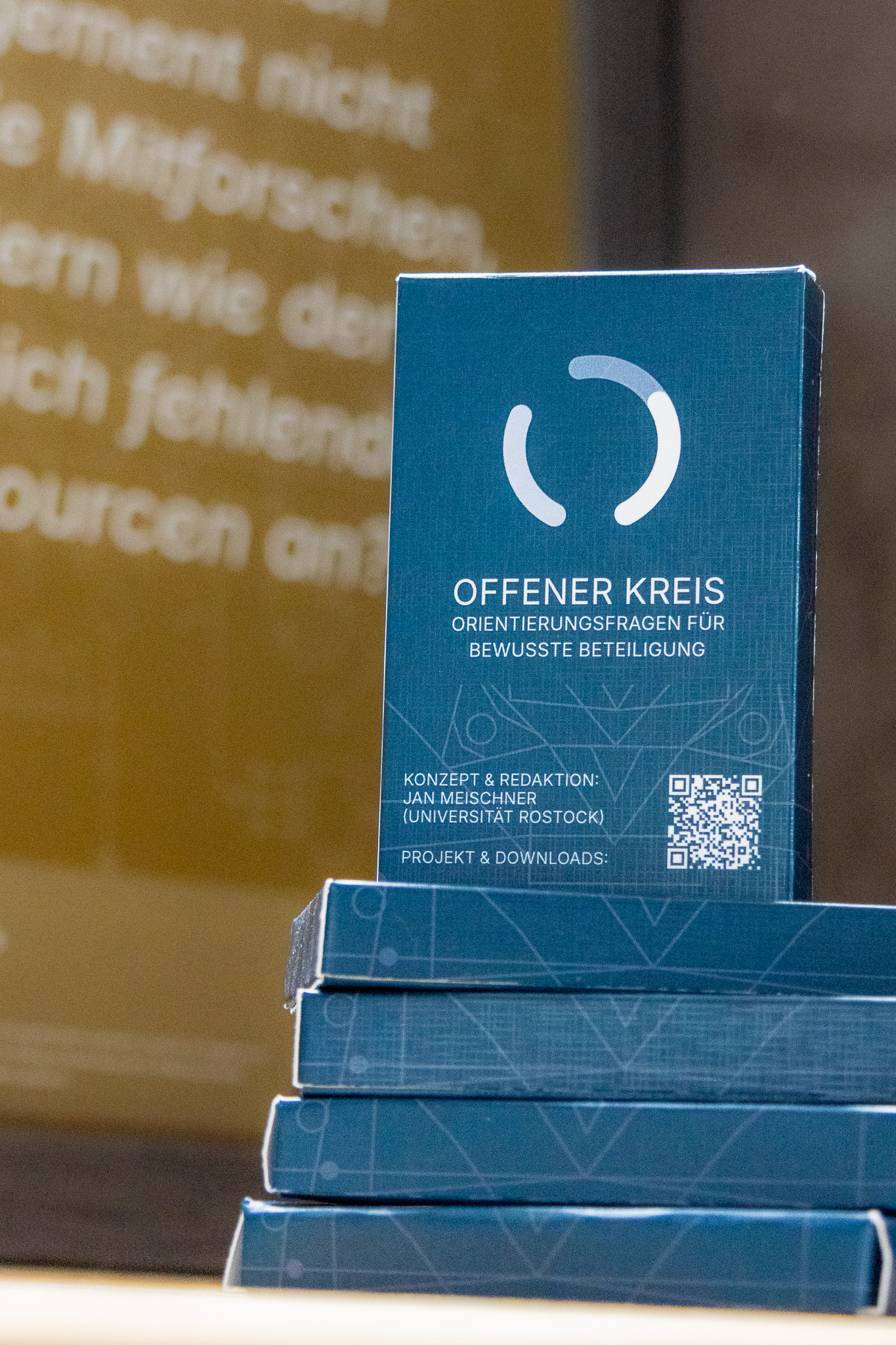
A few weeks ago, I wrote about the final steps of the design process behind Offener Kreis.
At that point, the visual system was largely finished. The cards had their colors, icons, typography, and supporting materials. What still existed mostly on screens and in print-ready files, however, had not yet become a physical object.
That has changed.
Turning files into artifacts
The final phase of the project turned out to be much less glamorous than the design work itself.
There were print files to prepare, packaging layouts to assemble, poster designs to create, website content to write, and countless small details that only become visible once something is about to leave the digital world.
Alongside the card set itself, I also designed a small series of posters based on the same visual language. Their purpose is not to explain the framework in detail, but to make some of its central questions visible in everyday environments such as offices, meeting spaces, or university corridors.
At the same time, I invested a considerable amount of effort into building the project website.
The goal was not only to provide background information, but also to create a place where people can access supporting materials, learn about the idea behind the set, and share their experiences.
Because feedback will be crucial for the future development of the project, the website includes a dedicated feedback form directly on the page.
The first printed copies
Before the full production run, the printing company provided a test print.
Seeing the cards as physical objects for the first time revealed a few details that had been difficult to judge on screen. The box design received a small adjustment, and I asked for a higher print resolution for the cards themselves.
The changes were minor, but worthwhile.
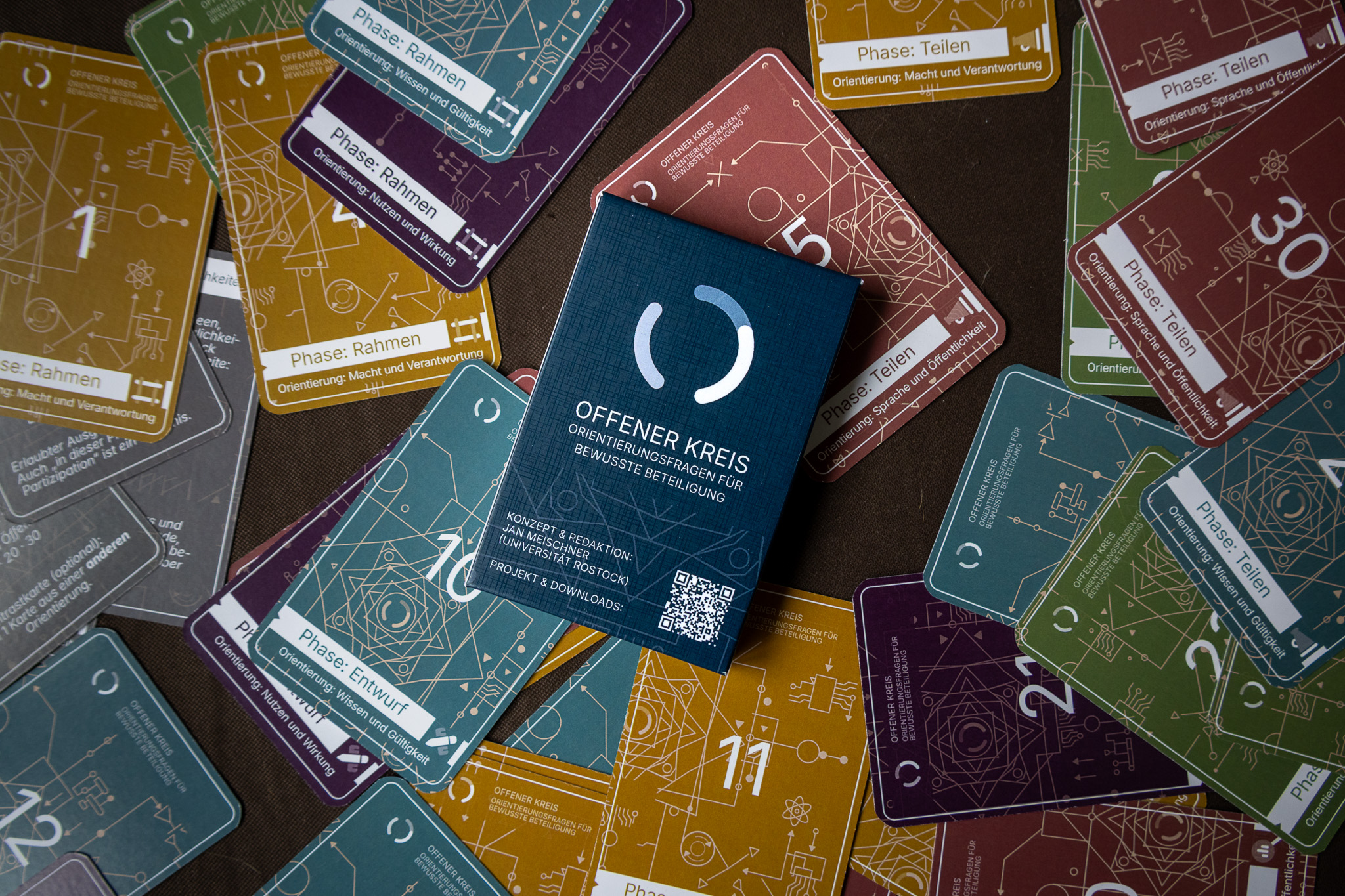
Then, shortly after returning from my stay in Saint-Malo, the large package from the printing company finally arrived.
For the first time, the project existed not as files, mockups, or prototypes, but as an actual object that could be held, used, packed, and shared.
The posters followed shortly afterwards through a small print run produced by the University of Rostock’s printing service.
The project enters a new phase
Since then, the first batch of card sets has already been distributed to interested participants from the partX programme.
What I find interesting is that the project now faces a challenge that did not exist during development.
Creating the set was largely under my control. Understanding whether it is genuinely useful is not.
One aspect I did not manage during the funded project period was to use the card set myself in a real-world situation as a supporter of participatory research. As a result, I have not yet seen the framework being applied in the exact context for which it was originally designed.
This means that the next steps depend less on design decisions and more on learning from actual users.
In a sense, the project has moved from a phase of creation into a phase of listening.
Looking ahead
At the moment, I am mainly interested in understanding how people use the set, where it helps, where it creates confusion, and what feels missing.
If enough useful feedback emerges, I would be happy to continue refining and expanding the framework in future iterations.
For now, however, I am simply pleased that Offener Kreis exists beyond sketches, discussions, and design files.
It is a small thing, but after many months of work, holding the finished set in my hands felt like an important milestone.
If you are interested in receiving a copy, feel free to get in touch.
More information about the project can be found here:
From the project
Offener Kreis: reflection tools for participatory researchOffener Kreis is a set of reflection cards and minimalist posters to support structured conversations about participation, roles, and decision-making in research projects.
View project →You might also find these interesting
A short process note on how the Offener Kreis reflection card set evolved from a coherent layout into a clearer visual orientation system.
Documenting the process behind the reflection card set Offener Kreis. From research and question curation to structure, design exploration, and production considerations.
Notes from the partX closing event, including project pitches, discussions, and emerging collaborations around participatory research.
Occasional updates
If this kind of work interests you
I send occasional updates when projects reach meaningful milestones, something is released, or collaboration opportunities arise.
Note on authorship: This text was developed with the support of AI tools, used for drafting and refinement. Responsibility for content, structure, and conclusions remains with the author.